By the time I made it to move-in day, I was barely a person. Sweaty. Disheveled. Exhausted. For many of my residents, that was their first impression of me.
Move-in day for freshmen is always on a Saturday. For VAs, this is preceded by roughly two weeks of training. These two weeks are made up of 12-14 hour days and constant activity.
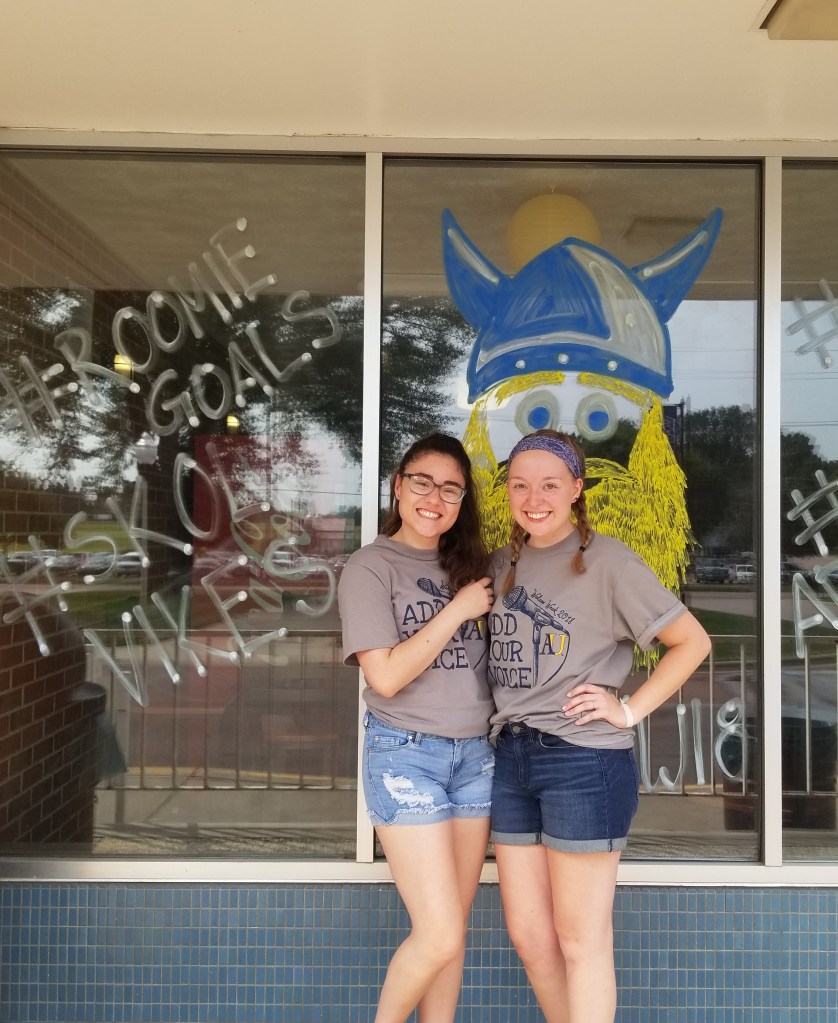
When move-in day finally arrived, I was functioning at about 20 percent but still caught up in the purely positive energy running through the building.
The Viking guides ran up and down the halls, trekked up and down the stairs carrying boxes, futons, laundry baskets and bedding, all while they chanted the number of the room that the stuff belonged to.
“Four thirteen! Four thirteen!”
“SKOL! SKOL! SKOL!”
They were all dripping sweat but still, the energy coursed through the halls.
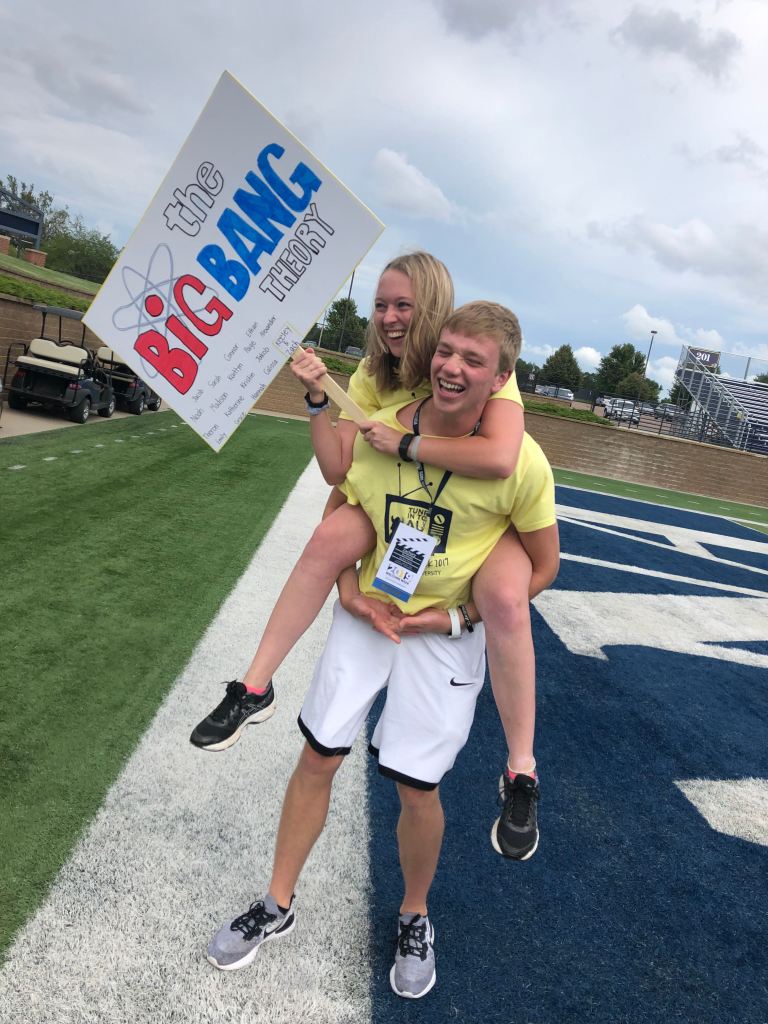
Move-in day showcases the heart of Augustana. It’s hard for freshmen to come in and not feel welcomed, especially since Campus Life’s motto on move-in day is “nothing is ‘not my problem.’”
During this time, VAs run around in a complete daze.
I’ve been through three move-in days—one as a freshman and two as a VA. My main goal for my move-in days as a VA was to make instant connections with my residents, making sure they knew that I was there and that I would help them with whatever they needed. This meant that I checked up on every resident at least five times more than I needed to.
I helped with everything from locating a screwdriver, setting up the new Wi-Fi, giving an inordinate number of directions, supplying helpful tips (such as cutting open a pool noodle and zip tying it to the sharp edges of the lofts) and reminding them that I was there to assist.
I often wonder if my residents thought I was helpful or just incredibly annoying. Either way, I knew this first day was crucial. I would be living with them for the entire school year, and I just really wanted them to know that they were not alone nor would they ever be.
Director of Campus Life Corey Kopp has worked in residence life for more than 10 years. He sees the impact that the VA role has on first-year students.
“There is not another position on campus—student or professional—with access to students’ lives in the ways that VAs have and in which the primary responsibility is meaningful relationship-development for the purpose of enhancing the student experience,” Kopp said.
Higher-education jargon aside, Kopp is right. As a VA, I work hard to make sure that my relationships with my residents—not just my own, but on other floors as well—are meaningful. I make a point to say my residents’ names as I pass them in the hall or the sidewalk. I learn as much as I can about them right away. I text them individually if I notice they haven’t been around much.
None of this is in the VA rulebook. This is part of my personal VA philosophy. I don’t want my residents to see me as “that senior who lives on our floor and only talks to us during floor meetings.” I want them to see me as a friend (to a certain extent; that’s a different blog), a listening ear, a helper and a mom. (Yes, a mom. Many of my residents call me ‘mom’ and nothing makes me happier.)
I want each of my residents to feel special and welcomed even if that means their first visual of me is one where I’m sweaty and exhausted and fairly crazed. Because that’s me saying “I’m here, and I care.”
 Keeley Ehrmantraut